Awaab's Law in England
In England, Awaab's Law applies to registered providers of social housing: councils and housing associations letting under tenancies. Phase 1 has been in force since 27 October 2025 and covers emergency hazards and damp and mould that present a significant risk of harm. Phase 2 starts on 30 November 2026 and adds further hazards. The timescales are counted in working days from the point the landlord becomes aware.

In short
If you rent from a council or housing association in England and report damp or mould that could be a significant risk to health, your landlord must investigate within 10 working days, give you a written summary within 3 working days of finishing the investigation, and make the property safe within 5 working days of that. Emergency hazards must be dealt with within 24 hours. These are the Phase 1 rules, in force since 27 October 2025.
- Tenants of local authorities and private registered providers of social housing in England
- Not long leaseholders, shared owners or licensees
- Not private renters in England at the review date
- Report the damp or mould to the landlord in writing and keep the date
- Photograph the affected area: a wide shot, a medium shot and a close-up
- Count 10 working days from the report for the investigation
- Expect a written summary within 3 working days of the investigation ending
- If the landlord misses a deadline, complain formally and then to the Housing Ombudsman
- England only. Social housing tenancies only. Scotland has separate legislation with different timescales; Wales and Northern Ireland have no Awaab's Law.
- Timescales depend on the hazard being assessed as a significant risk of harm; minor mould may not trigger them
- Days are working days, not calendar days
- A landlord who cannot gain access must show reasonable endeavours; the clock does not simply excuse them
- This is a summary of official guidance, not legal advice
Put your photographs and dates in one case file. The first check is free and needs no account.
Start free caseWho it applies to
The duties bind registered providers of social housing, which means local authorities and private registered providers such as housing associations, where the home is let under a tenancy. Official guidance states that the requirements do not apply to long leaseholds, owner-occupied accommodation, low-cost home ownership, shared ownership or properties occupied under licence.
Private rented tenancies in England are not covered at the review date. Extension to the private rented sector would require separate regulations; check GOV.UK for the current position before relying on any date.
Social housing, private renting: what applies today and what comes later
Current law is what is in force on the day you read this; future phases are set out in regulations already made but not yet commenced. Nothing on this page is a substitute for the official guidance linked in the sources.
| Tenure | Today | From 30 November 2026 | Later |
|---|---|---|---|
| Social housing (council or housing association tenancy) | Awaab's Law Phase 1: emergency hazards within 24 hours; significant damp and mould investigated within 10 working days | Phase 2 adds excess cold and heat, falls, structural collapse, fire, electrical and domestic hygiene hazards | Phase 3: all remaining HHSRS hazards except overcrowding; date not set |
| Private renting | Not covered by Awaab's Law. Section 11 repairing duty, the Homes (Fitness for Human Habitation) Act 2018 and council HHSRS enforcement apply | No change under these regulations | Government has stated an intention to extend equivalent duties; no regulations in force. Check GOV.UK before relying on a date |
| Leasehold, shared ownership, licences | Not covered | Not covered | Not covered |
The phases
The phases are set by the Hazards in Social Housing (Prescribed Requirements) (England) Regulations 2025 and the 2026 amendment regulations, made under the Social Housing (Regulation) Act 2023. The Phase 2 date was confirmed in the government's Phase 2 guidance, last updated 31 July 2026.
| Phase | In force | Hazards covered |
|---|---|---|
| Phase 1 | 27 October 2025 | All emergency hazards, and damp and mould hazards that present a significant risk of harm |
| Phase 2 | 30 November 2026 | Adds excess cold, excess heat, falls on the level, structural collapse, fire and explosions, electrical hazards and domestic hygiene |
| Phase 3 | Date not yet set | All remaining HHSRS hazards (apart from overcrowding) where they present a significant risk of harm |
The timescales
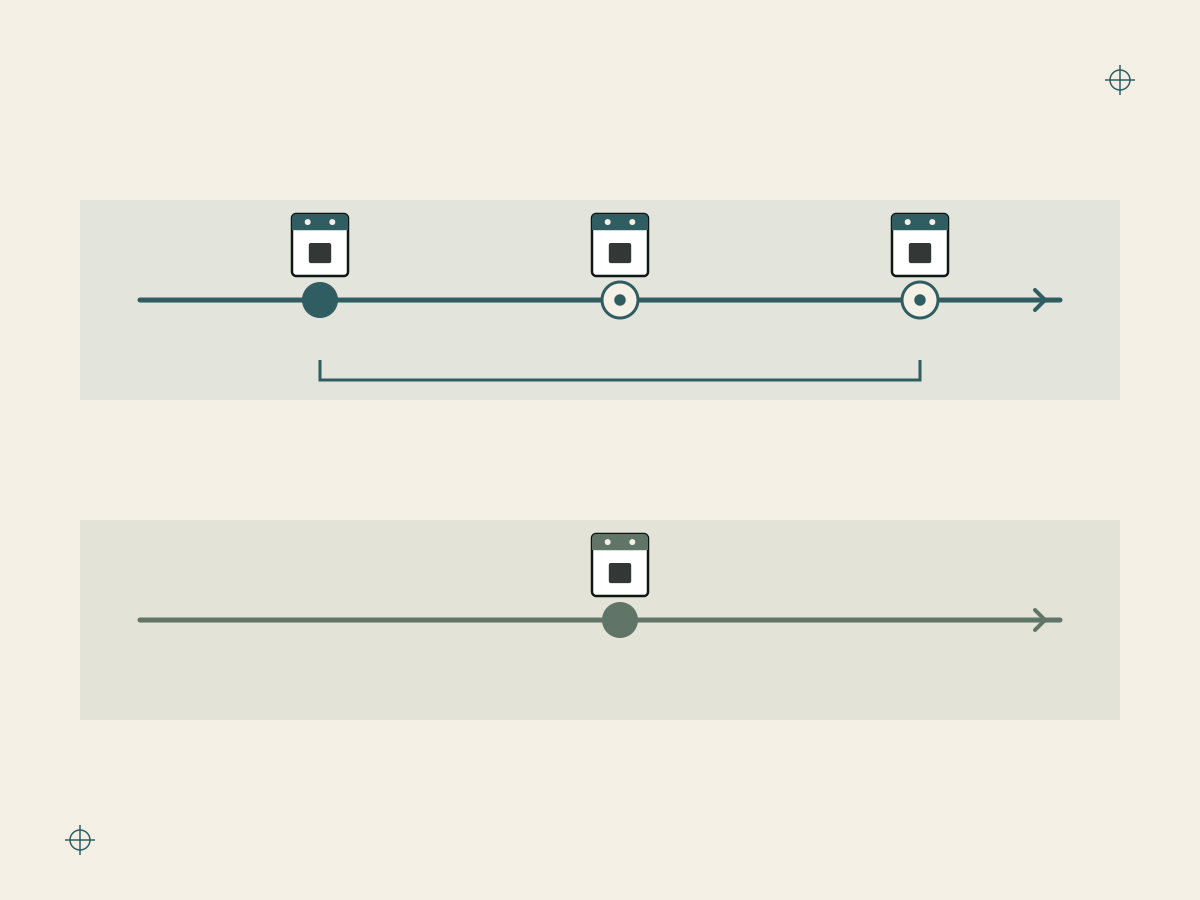
Working days exclude weekends and bank holidays. The written summary should say what was found, whether it is a significant hazard, and what the landlord will do and when.
| Duty | Timescale | Counted from |
|---|---|---|
| Investigate and make safe an emergency hazard | 24 hours | The landlord becoming aware |
| Investigate a potential significant hazard | 10 working days | The landlord becoming aware |
| Give the tenant a written summary of findings | 3 working days | The investigation concluding |
| Undertake relevant safety work to make the property safe | 5 working days | The investigation concluding |
| Begin supplementary preventative works | 5 working days, or within 12 weeks if impracticable | The investigation concluding |
What a tenant should do
- Report in writing (email, portal or letter) and keep a copy with the date. Follow up a phone call with something written.
- Photograph the problem the same day: a wide shot that places it in the room, a medium shot, and a close-up. Repeat weekly if it changes.
- Note anyone in the household with a respiratory condition, and any medical advice you have been given, because the landlord's risk assessment should take vulnerability into account.
- Keep the landlord's replies, appointment dates and any inspection report together.
- If a deadline passes, use the landlord's complaints procedure, then the Housing Ombudsman.
What a landlord should record
- The date and time the report was received, and from whom.
- The investigation date, who carried it out and what was found.
- The written summary sent to the tenant, and when.
- Safety work start and completion dates, and any supplementary preventative works.
- Where access could not be gained, every attempt made and the tenant's response.
Enforcement
The requirements are implied into social housing tenancy agreements, so a tenant can enforce them as terms of the tenancy, including through the courts. Complaints about a landlord's handling can go to the Housing Ombudsman after the landlord's own complaints process. The Regulator of Social Housing oversees landlords' compliance with consumer standards.
Frequently asked questions
A hazard that presents a significant risk of harm to the health or safety of the residents, assessed using the Housing Health and Safety Rating System. Whether a particular patch of mould reaches that threshold is a judgement the landlord's investigation has to make and explain in writing.
It starts when the landlord becomes aware of the potential hazard, whichever way that happens. A written report is easier to prove, which is why we recommend following any call with an email.
The guidance expects landlords to demonstrate reasonable endeavours to gain access and to record them. A landlord who tried repeatedly and recorded it is in a different position from one who did nothing. Keep your own record of appointment offers and responses.
Not Awaab's Law, at the review date. Your landlord still has repair obligations under section 11 of the Landlord and Tenant Act 1985 and must keep the home fit for human habitation under the Homes (Fitness for Human Habitation) Act 2018. Councils can also act under the Housing Act 2004.
From first photo to clear action.
Upload photos, record what's happened and build one clear damp and mould case file you can use with your landlord, council, adviser or for your own records.